
Flyer distribution gives businesses near Miami a direct way to reach both locals and tourists. It helps companies get their message out quickly to people in specific neighborhoods or busy areas.
There are plenty of ways to hand out, mail, or display flyers, so just about any budget can find a method that fits. You can go big or keep it simple, depending on your goals.

Picking the right flyer distribution strategy really matters. You’ve got to think about where your audience hangs out, what your flyer looks like, and how you’ll track the results.
The right approach can boost response rates and help you bring in more customers. Sometimes it’s trial and error, but that’s part of the process.
Key Takeaways
- Effective flyer distribution targets the right audience in Miami.
- Good design and planning make flyer campaigns more successful.
- There are several distribution methods to fit different needs.
Flyer Distribution Near Miami: What You Need to Know

Flyer distribution near Miami gives businesses a fast way to reach local customers. The method and service you pick can really change how many people actually see your message.
Overview of Flyer Distribution Services
Flyer distribution services in Miami help businesses get printed ads into homes, businesses, and specific targeted areas. Some companies go door-to-door, others hand flyers out on busy streets, and some leave them at local events.
They often use mapping tools to focus on neighborhoods with certain ages, incomes, or interests. Local services usually offer flexible packages, like distributing a set number of flyers per day or by zip code.
Some track deliveries using delivery verification or send photo proof, which is pretty reassuring if you’re paying for the service. Major providers in Miami include Flyerlink, MiamiFlyerPros, and local print shops with delivery teams.
Benefits of Local Flyer Distribution
Local flyer distribution lets businesses aim their message right at Miami residents, visitors, or nearby communities. This region-specific approach can get you better results than just running digital ads.
Flyers reach folks who might not be on social media or checking email all the time. Businesses can highlight special deals, new openings, or local events.
It’s easy to hand out flyers at parks, fairs, or shopping areas. Local teams know the city’s busiest spots and best times for foot traffic.
A simple flyer can make a brand feel more personal and memorable to locals. Sometimes, that personal touch really sticks.
Comparing Distribution Methods
Each flyer distribution method offers something a bit different. Door-to-door delivery targets homes directly, making sure each household gets a copy.
This works well for cleaning services, repairs, or local shops. Hand-to-hand distribution is better for busy areas like downtown or events, reaching a more active crowd.
Here’s a quick comparison:
| Method | Best For | Potential Reach | Cost |
|---|---|---|---|
| Door-to-Door | Households | Large | Moderate-High |
| Hand-to-Hand | Events, downtown | Medium | Lower-Moderate |
| Business Drops | Offices, stores | Small-Medium | Lower |
Some companies also do targeted mail drops, sending flyers by mail to select addresses. Each method comes with its own costs and level of control over who gets your info.
Choosing the right method depends on your goal and budget. Sometimes you just have to try a couple and see what works.
Types of Flyer Distribution Strategies in Miami
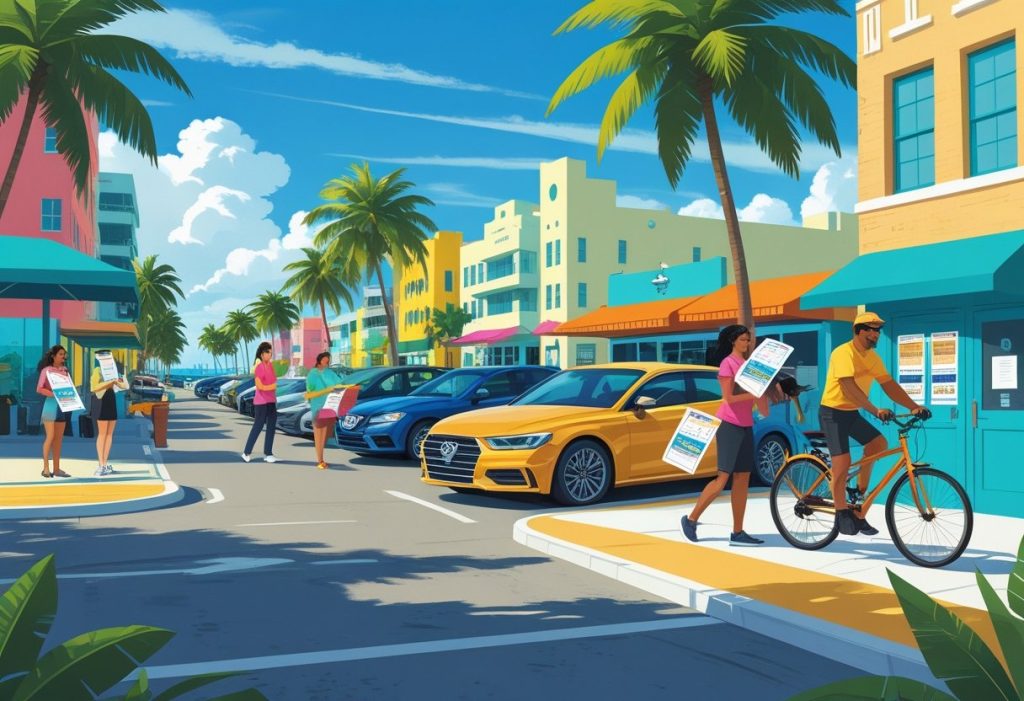
Flyer distribution in Miami uses different strategies to reach certain audiences. The method you pick depends on location, target group, and what your message is all about.
Door-to-Door Delivery
Door-to-door delivery is super common in Miami’s residential neighborhoods. Flyer distribution services often target apartment complexes, gated communities, and local homes.
This works well for events, local businesses, or political campaigns that want to reach families or renters directly. Distributors usually place flyers on door handles, under mats, or in mailboxes where it’s allowed.
The main benefit? You can target areas by zip code or demographic info, which makes tracking easier. The personal approach means people are more likely to notice the message.
Some companies use delivery verification or provide delivery verification forms as proof. This builds trust for clients using flyer distribution services.
Street Team Promotion
Street team promotion sends trained folks out to hand flyers to people in busy public spaces. Miami hotspots like South Beach, downtown events, and shopping centers are popular for this.
Distributors might wear branded shirts and talk to people directly about products, services, or events. This flyer strategy creates face-to-face interaction and lets you answer questions on the spot.
It’s great for concerts, grand openings, and seasonal launches where you want fast impact. Picking the right time and place, like weekends or big events, is key.
Street teams sometimes collect quick feedback or count how many flyers they hand out. It’s a hands-on way to get attention in Miami’s busiest spots.
Business-to-Business Distribution
Business-to-business flyer distribution puts flyers inside other local businesses, shops, or offices. Cafes, gyms, and salons might let you display your flyers at their counters or in waiting areas.
This method connects brands with customers who already spend time in those places. Flyer services usually build relationships with business owners and pick locations where the clientele matches your target market.
For example, a yoga studio might display flyers for healthy meal delivery or meditation events. This approach increases the chance your flyer reaches people who are relaxed and have time to read.
It also helps build community partnerships and expands your reach beyond sidewalks and homes. You always need to get permission first, and displays should be refreshed to keep things current.
Targeting the Right Audience in Miami
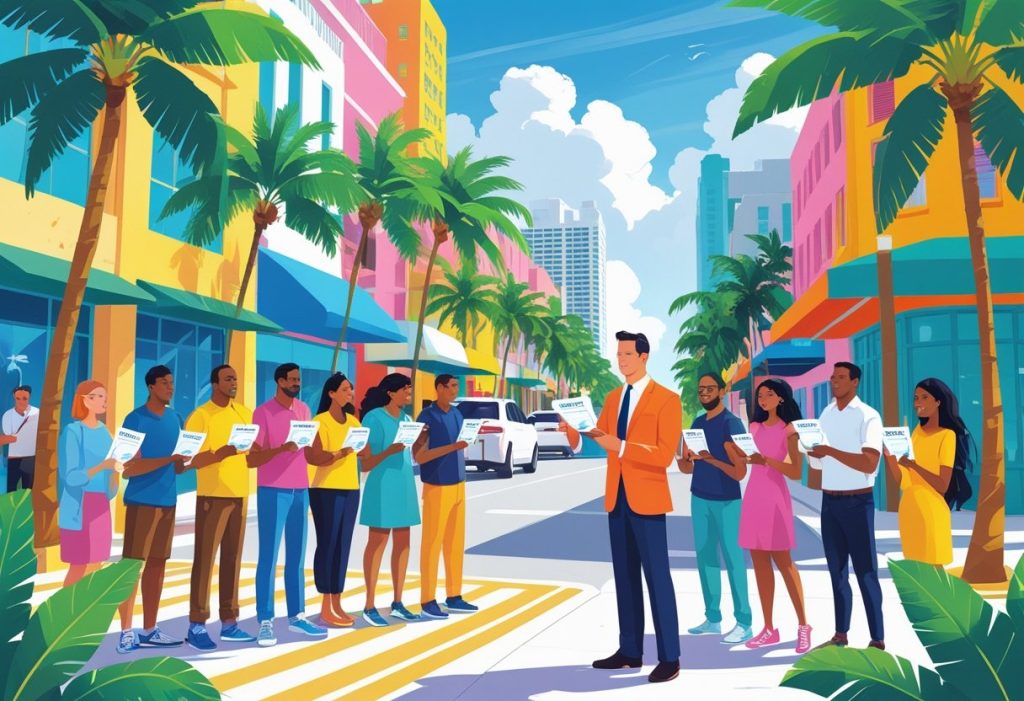
Successful flyer distribution near Miami really depends on reaching people who are most likely to care about your product or service. Matching your message and location to the right group boosts response rates and cuts down on wasted effort.
Identifying Your Target Audience
If you want the most from a flyer campaign, you’ve got to know who you’re talking to. Start by thinking about the age, lifestyle, and interests that fit your service or event.
For example, if you’re advertising family activities, focus on parents with young kids. Nightlife promotions? Adults aged 21-35 are probably your crowd.
Look at past promotions, website visitors, or customer data to spot patterns. Ask yourself:
- Who benefits most?
- Where do they live, work, or hang out?
- What problems does your service solve?
Listing details for the target audience helps you avoid handing out flyers to the wrong folks.
Geo-Targeting Neighborhoods
Miami’s neighborhoods are all different, so some areas will react better to certain messages. A flyer distribution campaign should consider things like income, popular shopping spots, and cultural backgrounds.
It helps to use a map or table to plan where you’ll cover:
| Neighborhood | Demographic Focus | Best Locations |
|---|---|---|
| Brickell | Young Professionals | Office complexes |
| Little Havana | Hispanic Families | Schools, churches |
| Wynwood | Art Lovers | Art galleries |
| Coconut Grove | Families | Parks, playgrounds |
Picking the right neighborhoods means you’ll get more attention from the right people. It’s a bit of a puzzle, but worth the effort.
Segmenting Demographics
Not everyone in Miami will care about your flyer in the same way. Segmenting by age, culture, or income lets you tailor your campaign.
Spanish-language flyers work better in areas with more Hispanic residents. High-value offers make more sense in wealthier neighborhoods.
Try grouping like this:
- Teens and young adults
- Families with children
- Seniors
- Tourists
Personalizing flyer design and offers for each group makes your campaign more relevant and likely to get a response. Adjust timing, language, and even color to fit each segment’s style.
This turns a generic message into something that feels direct and useful. It’s not always easy, but it pays off.
Designing and Printing Effective Flyers
Flyers need a clear message, strong visuals, and professional printing to stand out and look legit. Quality materials and printing styles make a real difference in how people react to your flyer.
Flyer Design Best Practices
A good flyer should be easy to read at a glance. Use big, bold headlines and keep key info short, preferably in bullet points.
Add a strong call-to-action so people know what to do next, like “Call Now” or “Visit Our Website.” Don’t bury your main message.
High-quality images and brand colors really help flyers stand out. Too much text or tiny fonts? People usually skip those.
Leave some blank space so the design doesn’t feel cramped or overwhelming. You want the important stuff to pop, not get lost.
Put contact details, logos, and dates where folks can find them right away. Always proofread—typos or grammar slip-ups can make you look careless.
Simple, clear designs usually work best for flyer distribution near Miami. Flashy is fine, but don’t overdo it.
Choosing the Right Printing Services
Picking a good printing service matters for both quality and budget. Check out local Miami printers with solid reviews and ask to see samples of their work.
Key features to check:
| Feature | Why It Matters |
|---|---|
| Print quality | Sharp images, no smudges |
| Turnaround time | Flyers are ready when needed |
| Customer support | Easy to fix issues or reorder |
| Price transparency | No hidden costs |
Ask about minimum order sizes and bulk discounts. Some printers also help with design or proofing before they print the final batch.
Compare pricing, but don’t just go for the cheapest option—better printing usually gets you better results.
Selecting Materials and Finishes
Paper and finish really change how a flyer feels. Glossy paper makes colors pop, while a matte finish cuts down glare and is easier to read.
Thicker paper can make flyers feel more premium and last longer. For outdoor use, water-resistant or coated papers hold up in Miami’s humidity or rain.
Eco-friendly paper is a smart pick if you care about the environment. Special finishes like UV spot coating or embossing add texture and a bit of flair.
Choose materials that match your brand and how you’ll hand out the flyers. Specialty finishes can get pricey, so keep your budget in mind.
Planning and Managing a Flyer Distribution Campaign
Running a flyer campaign in Miami really needs a clear plan and good management. Set goals, figure out your budget, and track results with the right data.
Setting Campaign Goals
Start by defining what you want the campaign to achieve. Goals shape everything—who you target, where you hand out flyers, and what your message says.
Maybe a local restaurant wants more lunchtime customers. Or a service provider wants the phone to ring more often.
Common goals include:
- Increasing local brand awareness
- Boosting store visits or website traffic
- Promoting special offers or events
Be specific. For example, aim to “increase weekday lunchtime orders by 20% within one month” instead of just “getting more customers.” That makes it easier to plan and measure results.
Budgeting and Pricing
Budgeting is a big part of running a flyer campaign. Costs usually include printing, design, and paying the people who hand out flyers.
Figure out how many flyers you need and which neighborhoods to target. That helps you set a realistic budget.
Here’s a sample budget for a small campaign:
| Item | Estimated Cost |
|---|---|
| Flyer Design | $100 |
| Printing (5,000 pcs) | $200 |
| Distribution Service | $400 |
| Permits (if needed) | $50 |
| Total | $750 |
Get quotes from a few printers and distributors. Some companies bundle printing and distribution for a better deal.
Tracking Success Metrics
Measuring flyer campaign success is crucial. Use unique coupon codes, special phone numbers, or website links on your flyers to track what’s working.
Important metrics to track:
- Number of new customers or inquiries
- Amount of sales related to flyer codes
- Increase in website or store visits during the campaign
Spreadsheets or simple tracking tools help keep everything organized. Reviewing the numbers shows if your campaign worked and what you might want to tweak next time.
Direct Mail and Alternative Distribution Methods
Flyer distribution in Miami isn’t just about handing things out on the street. Direct mail and other creative tactics can really help you reach people.
Benefits of Direct Mail in Miami
Direct mail sends flyers straight to homes and businesses. You can target by zip code or neighborhood, which is handy.
Pick the right mailing lists and you’ll reach specific groups—maybe homeowners, renters, or business owners. That kind of focus works well when you’re building brand awareness in Miami.
Tracking response rates is pretty easy with direct mail. Add coupons, QR codes, or special phone numbers to see who bites.
Physical mail stands out these days since most people don’t get much of it. Flyers are more likely to get noticed in the mailbox than in a crowded email inbox.
Some services offer Every Door Direct Mail (EDDM), which lets you reach every address in a neighborhood without breaking the bank. Great for grand openings or special events.
Integrating Digital and Offline Strategies
Mixing direct mail with digital channels gets your message in front of more people. Add a website or social media handle to your flyer so people can check you out online.
Lots of Miami businesses use QR codes or usernames on flyers to make it easy to connect. Seeing the same offer online and offline makes the message stick.
Here’s a quick look at how digital and offline methods work together:
| Method | Strength |
|---|---|
| Direct Mail | High local targeting |
| Social Media | Fast updates, engagement |
| QR Codes | Easy access to web info |
Tracking both digital clicks and flyer response helps you figure out what works best for your Miami audience.
Frequently Asked Questions
Flyer distribution around Miami takes planning, budgeting, and following local rules. There are also plenty of ways to track results and see how print stacks up to digital.
What are the most effective strategies for flyer distribution in residential areas?
Door-to-door delivery works well in Miami neighborhoods. Hanging flyers on front doors or slipping them in mailbox slots usually gets more attention.
Timing makes a difference. Weekends or early evenings, when people are home, boost the odds your flyer gets seen.
How can you measure the success of a flyer distribution campaign?
Track phone calls, website visits, or coupon redemptions from the flyers. Using unique codes or landing pages helps measure direct response.
You can also just ask new customers how they heard about you. Sometimes, the simplest approach works best.
Are there specific regulations to consider when doing flyer distribution in public spaces?
Miami-Dade County and city governments have rules about littering and putting materials on public property. You’ll usually need permission before posting flyers on poles, bus stops, or community boards.
Handing out flyers on busy sidewalks is often allowed, but don’t block walkways or leave trash behind. Fines can add up fast.
What are the average costs associated with professional flyer distribution services?
In Miami, prices depend on how many flyers you need, where you want them delivered, and how you want them distributed. Expect to pay anywhere from $0.12 to $0.30 per flyer for standard door-to-door service.
Extra fees can pop up for printing, targeting special neighborhoods, or if you need a rush job.
How do digital flyer distributions compare to physical flyer handouts in terms of reach and engagement?
Digital flyers reach a bigger audience fast through email or social media, but some people just ignore them.
Physical handouts feel more personal and are often noticed more in local areas, but they take more time and effort to distribute.
What are the best practices for hiring and managing a team of flyer distributors?
Check references and make sure your team knows the local rules. Tracking routes and confirming deliveries helps keep quality up.
Train everyone to be polite and stay off private property to avoid complaints. Simple check-in systems or route maps help keep things organized.
Our State-of-the-Art AI Management Platform
Direct to Door Marketing uses a powerful AI Management Platform that handles every step of flyer distribution near Miami.
Key features include:
- Real-Time Job Tracking: You can view current job progress, delivery status, and proof-of-delivery through a simple dashboard.
- AI Route Optimization: The system figures out the fastest, most efficient paths for every delivery team.
- Proof of Delivery: Each delivery comes with geo-tagged, time-stamped photos for full transparency.
Proof of Delivery Table
| Feature | Benefit |
|---|---|
| Geo-tagged Photos | Proves location |
| Time-stamped | Shows exact delivery time |
| Instant Uploads | Fast access in real-time |
The AI catches duplicate entries, missed stops, or anything odd that pops up. If something goes wrong during a job, the platform fires off smart alerts—email, text, or in-app, whatever works.
You can track performance easily. Detailed analytics give you stats, delivery maps, and feedback from supervisors.
Clients get to log in anytime to check campaign results. It’s all pretty straightforward.
Whether you’re targeting a busy Miami neighborhood or a quieter spot outside the city, this platform helps make sure every flyer actually gets delivered.