
How Much Does Door Hanger Distribution Cost? Complete 2026 Pricing Guide
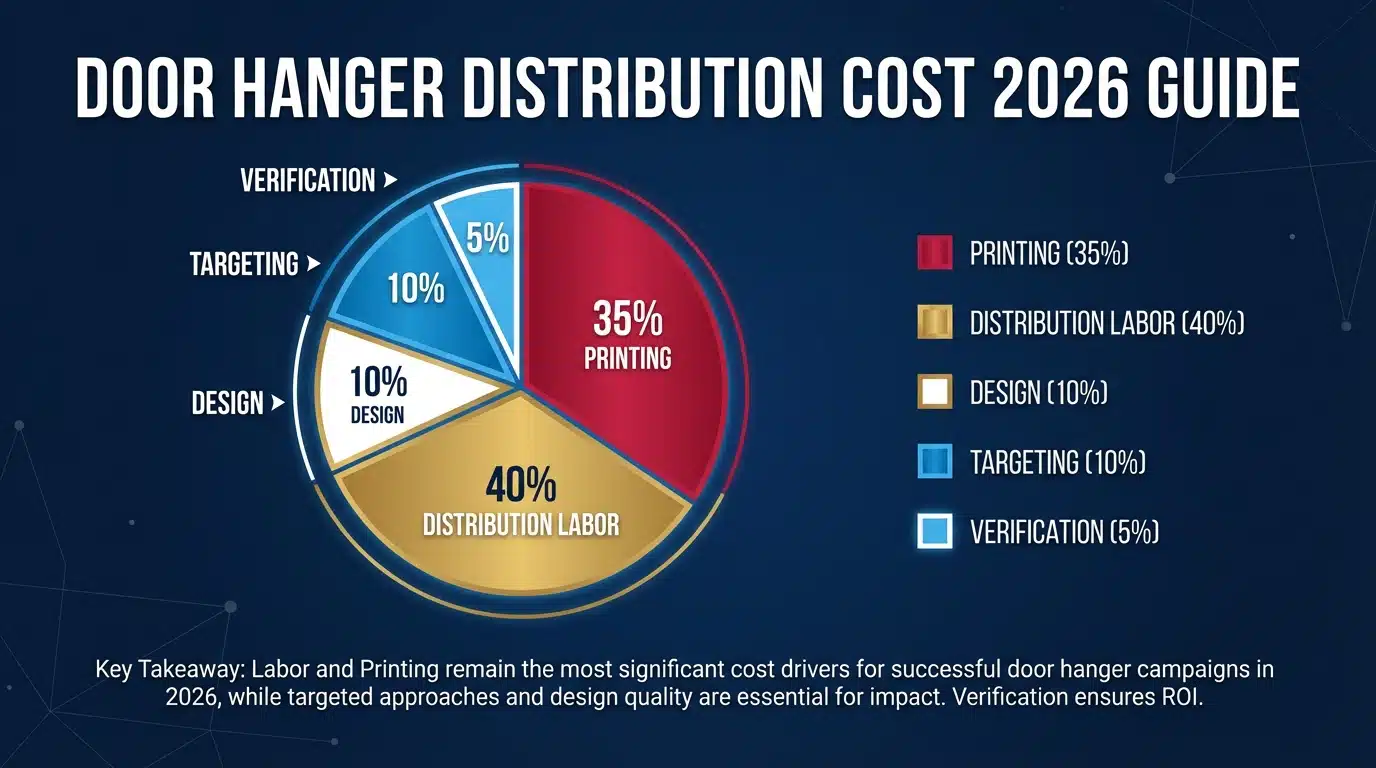
Door hanger distribution cost is the single most common question business owners ask before launching their first campaign. It is a fair question — and the answer is more nuanced than a single number. The total cost of a door hanger campaign depends on how many pieces you print, where you distribute them, how precisely you target your audience, and whether you invest in verified delivery to confirm every piece reaches its destination.
At Direct to Door Marketing, we have managed over 500 million pieces of door hanger and flyer distribution since 1995. With 16,726+ distributors covering 99% of U.S. cities, we have seen every campaign size imaginable — from a startup pizza shop covering 500 homes to a national franchise blanketing 200,000 households across multiple metros. This guide breaks down exactly what you will pay, what drives those costs, and how to get the most from every dollar.
What Determines the Cost of Door Hanger Distribution?
Door hanger distribution cost is not a single line item — it is a combination of several cost components that stack together to create your total campaign investment. Understanding each component helps you make smarter decisions about where to spend and where to save.
The Five Core Cost Components
Every door hanger campaign includes some or all of these cost factors:
- Design: The creative work of designing your door hanger — layout, copywriting, and graphic design. Some businesses bring their own design; others need professional help.
- Printing: The physical production of your door hangers. Cost depends on paper stock, size, color, finish (gloss vs matte), and quantity.
- Distribution labor: The actual cost of placing door hangers on residential doors — foot-by-foot, door-by-door. This is typically the largest single component.
- Targeting: The strategic work of identifying which neighborhoods, zip codes, or demographics to hit. Precise targeting may involve data analysis and route planning.
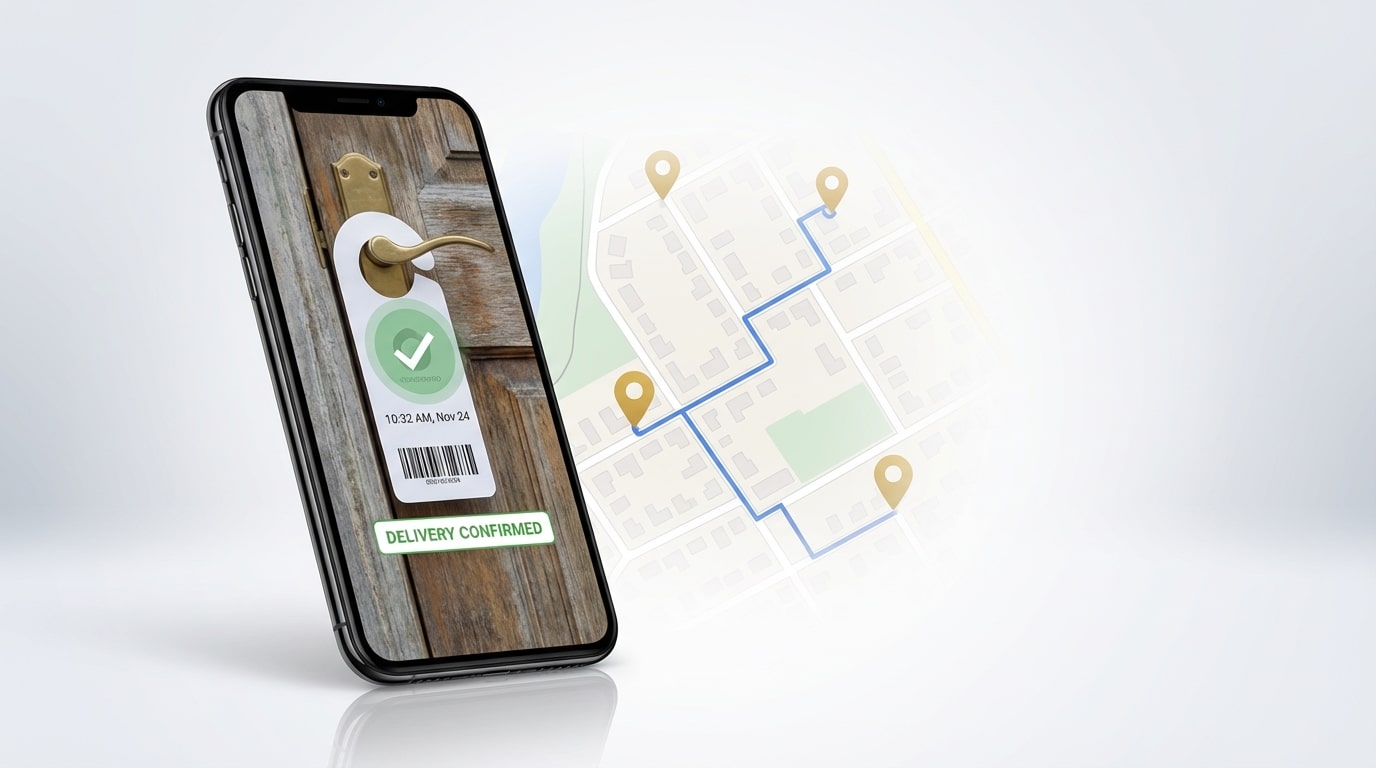
- Verification: Proof that your door hangers were actually delivered. At Direct to Door, this means our AI Management Platform with real-time Proof of Delivery photos — not vague assurances.
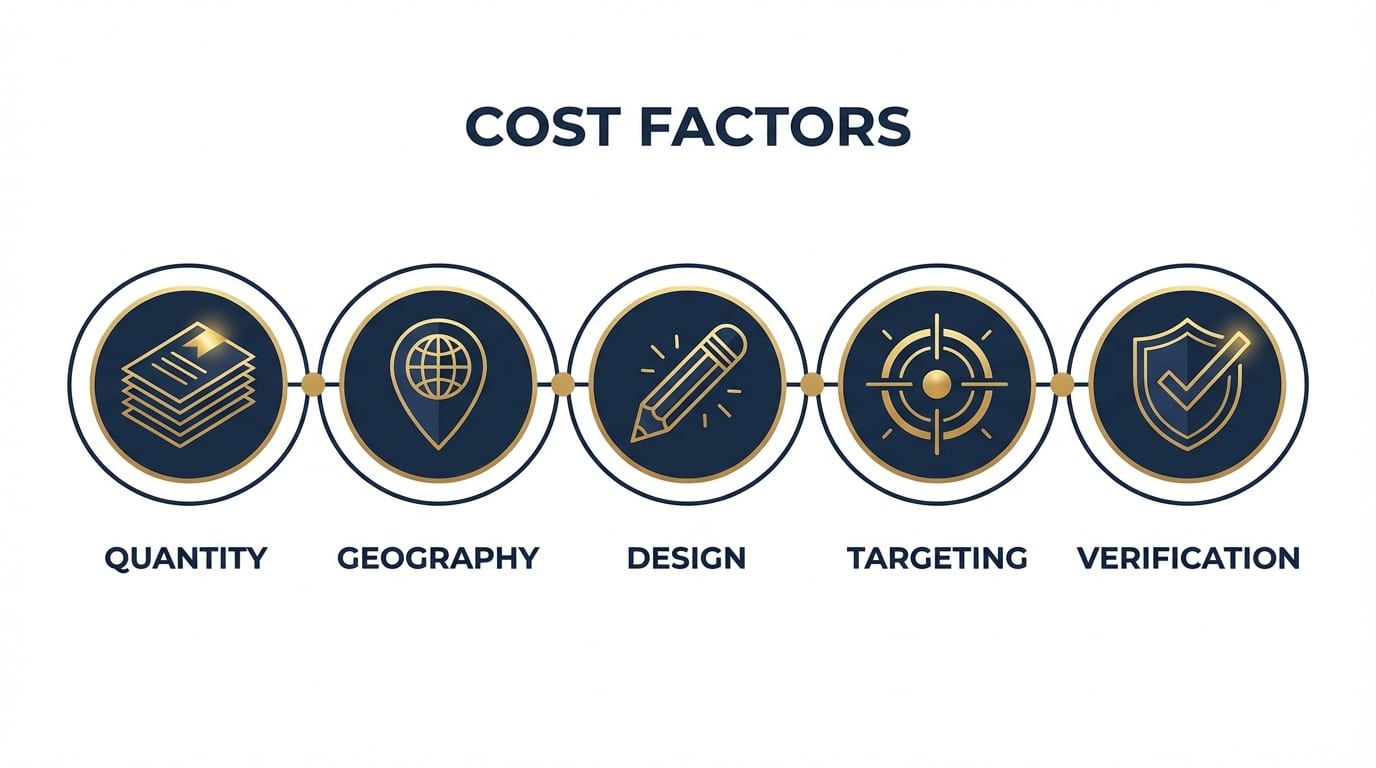
The relative weight of each component shifts depending on your campaign. A small campaign of 1,000 pieces in a single neighborhood will have a higher per-piece cost but a lower total investment. A citywide campaign of 50,000 pieces will have a lower per-piece cost but a larger total budget. Understanding this tradeoff is essential to planning effectively.
Door Hanger Printing Costs: What to Expect
Printing is one of the most predictable costs in a door hanger campaign. Standard door hangers are printed on heavy cardstock (typically 14pt or 16pt), full color on both sides, with a die-cut hole for hanging on door handles.
Standard Printing Price Ranges
Printing costs vary based on quantity, paper quality, and finish. Here are typical ranges for standard 4.25″ x 11″ door hangers, full color, two-sided:
- 500 pieces: $0.15–$0.25 per piece ($75–$125 total)
- 1,000 pieces: $0.10–$0.18 per piece ($100–$180 total)
- 5,000 pieces: $0.06–$0.12 per piece ($300–$600 total)
- 10,000 pieces: $0.04–$0.08 per piece ($400–$800 total)
- 25,000+ pieces: $0.03–$0.06 per piece ($750–$1,500 total)
Key Insight: Printing costs drop dramatically at volume. Going from 1,000 to 10,000 pieces can cut your per-piece printing cost by more than half. If your budget allows, printing more upfront almost always saves money.
Premium Options That Add Cost
Several upgrades can increase printing costs but may improve campaign performance:
- UV coating or gloss lamination: Adds $0.02–$0.05 per piece but creates a premium look and feel
- Custom die-cut shapes: Non-standard shapes (like a pizza slice or house) can add $0.03–$0.08 per piece
- Tear-off coupons or perforations: Adds $0.02–$0.04 per piece but gives recipients a built-in reason to act
- Thicker stock (16pt+ or plastic): Adds $0.03–$0.10 per piece but dramatically increases durability
For most local campaigns, standard 14pt cardstock with gloss coating provides excellent quality at the most efficient price point.
Distribution Labor Costs: How It’s Calculated
Distribution labor is where the real work — and the real cost — lives. This is the cost of having trained distributors walk every street in your target area and place a door hanger on every qualifying residential door.
Door hanger distribution is labor-intensive by design. Unlike direct mail, which is sorted and delivered by USPS machinery, door hangers are placed by hand on every individual door handle. This is exactly why they command so much more attention than mail — but it also means distribution labor is typically the largest cost component of any campaign.
What Drives Distribution Labor Costs
- Home density: Urban neighborhoods with homes close together are faster and more cost-efficient to cover than spread-out rural areas.
- Walking distance: Long driveways, gated communities, and steep terrain slow distributors down and increase per-piece costs.
- Time of year: Extreme weather seasons may affect distributor availability and pace in some regions.
- Volume: Larger campaigns allow distributors to work more efficiently, reducing the per-piece cost.
Professional distribution through a company like Direct to Door Marketing typically costs between $0.08 and $0.20 per door, depending on geography and volume. This includes route planning, quality assurance, and delivery management. In most metro areas, a rate of $0.10–$0.15 per door is common for campaigns of 5,000 pieces or more.
Cost by Campaign Size
One of the most useful ways to understand door hanger distribution cost is to look at complete campaign packages — everything from design through delivery — organized by size. The following table provides realistic cost ranges that account for printing, distribution, and basic targeting.
| Campaign Size | Estimated Doors | Typical Total Cost Range | Cost Per Door | Best For |
|---|---|---|---|---|
| Starter | 500–1,000 | $150–$350 | $0.25–$0.35 | Testing a neighborhood, micro-local businesses |
| Small | 1,000–5,000 | $300–$900 | $0.18–$0.28 | Single neighborhood, grand openings, local restaurants |
| Medium | 5,000–15,000 | $750–$2,500 | $0.14–$0.20 | Multi-neighborhood coverage, HVAC/home services, real estate |
| Large | 15,000–50,000 | $2,000–$7,500 | $0.12–$0.16 | Citywide coverage, franchise launches, major promotions |
| Enterprise | 50,000–500,000+ | $6,000–$60,000+ | $0.08–$0.14 | Multi-city rollouts, national brands (Uber, AT&T, RE/MAX) |
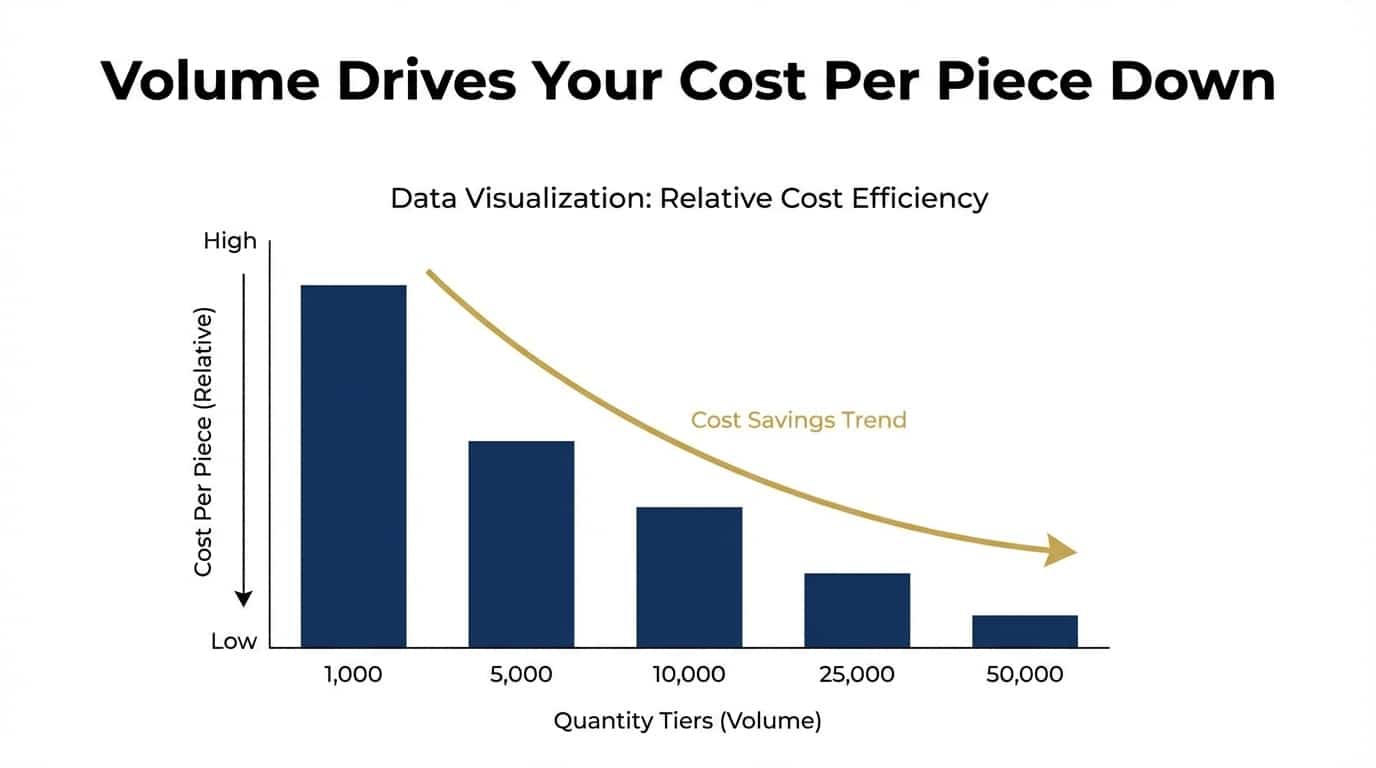
The pattern is clear: the more doors you cover, the lower your per-piece cost. This is one of the core economic advantages of door hanger distribution — it scales efficiently. A business distributing 50,000 door hangers pays roughly half the per-door cost of a business distributing 1,000.
The total cost ranges above are estimates. Your actual cost depends on specific factors like geography, targeting complexity, and whether you need design services. The most accurate way to get your number is to request a free quote based on your specific goals and target area.
Cost by Geography: Urban vs Suburban vs Rural
Where you distribute has a major impact on cost — sometimes more than quantity does. The density of homes in your target area directly affects how quickly distributors can cover ground.
Urban Areas
In dense urban neighborhoods — apartment-heavy areas, townhouse rows, compact residential streets — distributors can cover a high number of doors per hour. This drives the per-door cost down, often to the $0.08–$0.14 range for larger campaigns. Cities like New York, Chicago, and Los Angeles have dense residential zones that are highly efficient for distribution.
Suburban Areas
Standard suburban neighborhoods with single-family homes on quarter-acre to half-acre lots are the most common distribution environment. Home density typically falls between 400–600 homes per square mile. Per-door costs in suburban areas typically land in the $0.12–$0.18 range — the sweet spot for most local business campaigns.
Rural Areas
Spread-out rural areas with long driveways, large lots, and significant distances between homes are the most expensive per door to cover. With densities below 100 homes per square mile, distribution is slower and per-door costs can reach $0.20–$0.30 or more. For rural businesses, a tighter geographic focus around the business location is usually the smartest budget strategy.
Hidden Costs to Watch Out For
When comparing quotes for door hanger distribution, look beyond the headline number. Several costs can be hidden or unexpected if you are not asking the right questions.
Design Fees
If you do not have a print-ready design, you will need one. Professional door hanger design ranges from $150–$500 depending on complexity. Some distribution companies offer design services; others do not. At Direct to Door, we work with clients to ensure their design is optimized for response before it goes to print.
Targeting and Route Planning Fees
Basic distribution covers a general area. But if you need specific demographic targeting — for example, only homes with household income above a certain level, or only single-family homes excluding apartments — the data analysis and route planning can add cost. Most professional distributors include basic targeting in their quotes, but advanced targeting may carry a surcharge.
Rush Delivery Fees
Standard turnaround for campaign setup and distribution is typically 5–10 business days after materials are received. If you need faster deployment, rush fees may apply — typically 15–25% above standard pricing.
Minimum Order Requirements
Some distribution companies impose minimum order quantities or minimum campaign values. This is because the logistics of deploying a very small campaign (under 500 pieces) are disproportionately expensive relative to the number of pieces. Ask about minimums upfront to avoid surprises.
The “Too Good to Be True” Trap
If a distributor quotes a price dramatically below market — say, $0.03 per door for distribution — ask how they verify delivery. Without a verification system, you have no way to confirm your door hangers actually reached homes. The cheapest quote often means the least accountability. Direct to Door’s AI Management Platform provides Proof of Delivery photos so clients know where their materials went.
How to Get the Most Out of Your Door Hanger Budget
Regardless of your budget, there are proven strategies to maximize the return on your door hanger investment.
1. Start With a Focused Area and Expand
Do not try to cover an entire city on your first campaign. Target the 1–3 mile radius around your business with your initial campaign. Measure results. Then expand to adjacent neighborhoods with your next round. This approach lets you test messaging and targeting before committing larger budgets.
2. Invest in Good Design and Copy
Your door hanger gets roughly five seconds of attention. A professionally designed piece with a compelling headline, a clear offer, and an obvious call to action will dramatically outperform a cluttered, text-heavy design. Spending an extra $200 on design can improve the performance of a $2,000 campaign by orders of magnitude.
3. Include a Trackable Offer
Use a unique promo code, a dedicated phone number, or a QR code linked to a specific landing page. This lets you measure exactly how many customers came from your door hanger campaign — turning “marketing expense” into “measurable investment.”
4. Print More, Distribute in Waves
If your budget allows, print a larger quantity to take advantage of volume discounts, then distribute in waves over several weeks. Three drops of 3,000 door hangers to the same area over six weeks typically outperforms a single drop of 9,000 to different areas. Repetition builds recognition.
5. Time Your Campaign Strategically
HVAC companies should distribute before the first heat wave of summer and the first cold snap of fall. Restaurants should distribute before major holidays and events. Real estate agents should target neighborhoods with rising home values in spring selling season. Timing your campaign to match when customers are most likely to need your service amplifies your results without adding cost.
What Does Verified Delivery Cost — And Is It Worth It?
This is one of the most important cost questions in the entire door hanger industry — and one that separates professional distribution from amateur operations.
Verified delivery means you receive proof that your door hangers were actually placed on doors in your target area. At Direct to Door Marketing, verified delivery is powered by our proprietary AI Management Platform, which collects Proof of Delivery photos from every distribution route. This is not GPS tracking (an outdated approach) — it is photographic verification of actual delivery.
What Verification Typically Costs
Verified delivery typically adds $0.02–$0.05 per piece to your campaign cost. On a 5,000-piece campaign, that is an additional $100–$250 for complete peace of mind that your investment actually reached its intended audience.
Why It Is Worth Every Penny
Without verification, you are trusting that your materials were delivered based on nothing more than someone’s word. The door hanger industry has historically suffered from accountability issues — distributors dumping materials in dumpsters, skipping difficult neighborhoods, or simply not completing routes. Verification eliminates that risk entirely.
Industry Fact: Direct to Door Marketing has delivered over 500 million pieces since 1995, all backed by delivery verification. With 16,726+ distributors covering 99% of U.S. cities, our AI Management Platform with Proof of Delivery photos provides the accountability that businesses need to invest confidently in door hanger campaigns.
When you compare door hanger distribution costs between providers, always ask about verification. The cheapest quote without verification may end up being the most expensive mistake you make.
Frequently Asked Questions About Door Hanger Distribution Cost
How much does it cost to distribute 1,000 door hangers?
Distributing 1,000 door hangers typically costs between $180 and $350 total, including printing and distribution. The exact price depends on your geographic area, the complexity of your targeting, and whether you choose verified delivery. Urban areas with dense housing tend to be more cost-efficient per piece than spread-out suburban or rural neighborhoods.
Is door hanger distribution cheaper than direct mail?
In most cases, yes. Direct mail campaigns typically cost $0.30–$0.80 per piece when you factor in printing, postage, and list rental. Door hanger distribution can cost as little as $0.08–$0.20 per door depending on volume, with no postage expense. Door hangers also achieve significantly higher visibility since they are placed directly on the door handle rather than mixed into a stack of mail.
What is the cheapest way to distribute door hangers?
The lowest per-piece cost comes from large-volume campaigns (10,000+ pieces) distributed in dense suburban or urban areas. Economies of scale reduce printing and distribution costs significantly. However, “cheapest” should not be the only consideration — a campaign with verified delivery and strategic targeting will deliver far better results than the absolute lowest-cost option.
Do I need to pay for design separately?
It depends on the provider. Some door hanger distribution companies include basic design services in their campaign packages. Others require you to provide a print-ready file. Professional design typically costs $150–$500 as a one-time fee. If you plan to run multiple campaigns, investing in a strong design upfront pays dividends over time since you can reprint with minimal changes.
How does door hanger distribution cost compare to Google Ads?
Door hanger distribution typically reaches households for $0.08–$0.25 per home. Google Ads costs vary enormously by industry, but local service keywords often cost $5–$50+ per click — and not every click converts. For hyperlocal businesses targeting specific neighborhoods, door hangers frequently deliver a lower cost-per-household-reached than digital advertising. Many businesses use both channels together for maximum impact. For a full comparison, see our guide on door hangers vs Google Ads.
Are there volume discounts for larger door hanger campaigns?
Yes, volume discounts are standard in the industry. Both printing and distribution costs decrease significantly at scale. A campaign of 50,000 pieces might cost $0.10–$0.14 per door total, compared to $0.25–$0.35 per door for a 1,000-piece campaign. If you plan to distribute over multiple months, printing your full quantity upfront and distributing in waves can lock in volume pricing while spreading your distribution over time.
How much should I budget for my first door hanger campaign?
For a first-time campaign, a budget of $500–$1,500 is a practical starting point for most local businesses. This typically covers 2,000–8,000 door hangers with printing, distribution, and basic targeting. Start with the neighborhoods closest to your business, include a trackable offer, and use the results to inform your next campaign. Many of Direct to Door’s long-term clients started with campaigns in this range before scaling significantly.
What is included in a “full-service” door hanger campaign quote?
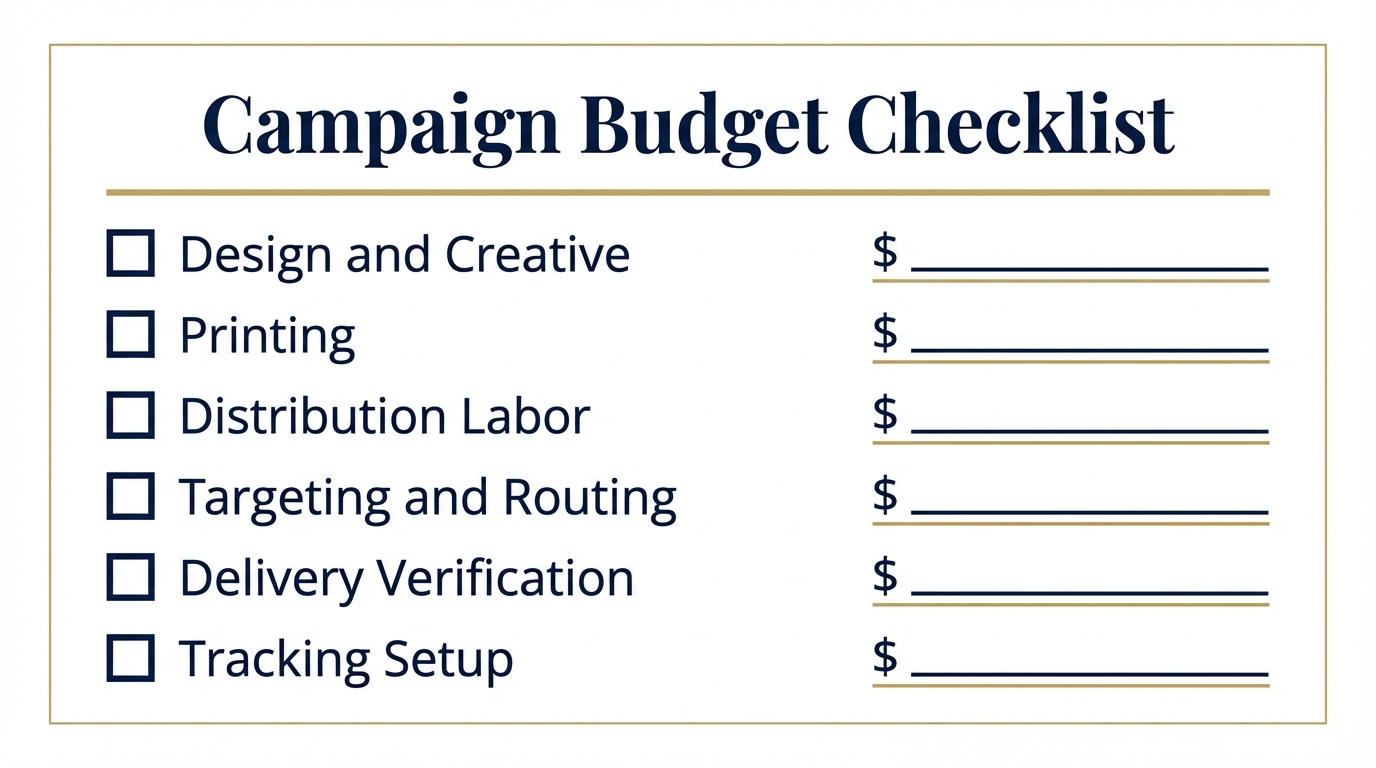
A full-service quote from a reputable distribution company should include: design assistance or review, printing, targeting and route planning, physical distribution to every door in your target area, and delivery verification. Some providers bundle all of these; others price them separately. When comparing quotes, make sure you are comparing the same scope of services. Request a quote from Direct to Door to see a full-service breakdown for your specific campaign goals.
Can I reduce costs by distributing door hangers myself?
DIY distribution eliminates the distribution labor cost, but it comes with significant tradeoffs. Walking door-to-door is physically demanding and time-consuming — an experienced distributor covers roughly 80–120 doors per hour, meaning 5,000 doors would take one person approximately 45–60 hours of walking. For a business owner, that time is almost always better spent running the business. Professional distribution also provides accountability, route optimization, and verified delivery that DIY cannot match.
Conclusion: Invest Smart, Track Results, Scale What Works
Door hanger distribution is one of the most cost-efficient and impactful local marketing strategies available to businesses in 2026. By understanding the cost components — design, printing, distribution, targeting, and verification — you can build a campaign that fits your budget and delivers measurable results.
The key principles are simple: start focused, invest in quality design and copy, choose a distributor who verifies delivery, and track your results with a unique offer or code. Then scale what works.
Direct to Door Marketing has helped businesses of every size — from independent restaurants to Fortune 500 brands like Uber, Chick-fil-A, AT&T, and RE/MAX — plan and execute door hanger campaigns that deliver. With 16,726+ distributors, 500 million+ pieces delivered since 1995, and our AI Management Platform providing Proof of Delivery on every campaign, we make door hanger distribution accountable, scalable, and effective.
Ready to find out exactly what your campaign will cost? Get your free quote today or call us at (866) 643-4037.
Written by the Direct to Door Marketing editorial team, with 30+ years of door hanger distribution expertise serving businesses from local startups to Fortune 500 companies.
Continue Reading: Door Hanger Marketing Guides
Best Time to Distribute Door Hangers
Door Hanger Campaign Success Stories
Door Hanger Distribution for Local Businesses 2026
Facts About Front Door Advertising