
Door-to-door door hanger delivery in almost every city and town in America — with Proof of Delivery photos on every campaign.
40,368+ local distributors across all 50 states. Thousands of cities served simultaneously.
A door hanger distribution service is a company that physically delivers printed door hangers to the front doors of targeted homes using trained local distributors, then verifies the work with Proof of Delivery photos. Direct to Door Marketing (DTD) operates America’s largest door hanger distribution network — 40,368+ local distributors covering 99% of U.S. cities, since 1995.
DTD has the only nationwide door hanger distribution network deep enough to run any campaign size, anywhere in America, all at the same time.
You may also see this service described as door hangers distribution, door hanger delivery, or door-to-door door hanger marketing — all names for the same thing: DTD physically places your printed door hangers on the exact front doors you want to reach, then documents every campaign with Proof of Delivery photos.
On this page
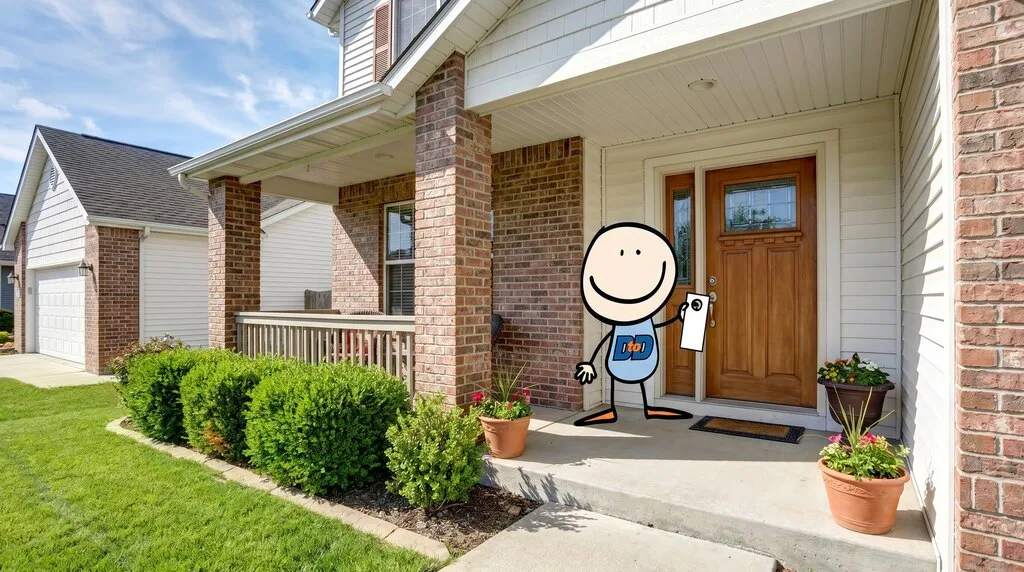
What door hanger distribution actually looks like at the door.
Most door hanger distribution companies hand a map to a crew, hope for the best, and have no way to prove what actually got delivered. DTD built proprietary mapping software — the DTD Campaign Planner — that lets you draw any neighborhood on a real map, get an instant household count and price estimate, with photo-verified Proof of Delivery reporting on every campaign. No other door hanger distribution service in the United States operates this way.
The mapping software is the operational layer that makes nationwide simultaneity possible. When a campaign coordinator can see distributor density on a map for any ZIP code in America, they can quote, route, and dispatch a 47-city rollout with the same workflow they use for a single Houston neighborhood — the difference between a logistics company and a middleman who subcontracts everything.
DTD’s distributor network spans all 50 states with at least one local distributor in 99% of U.S. cities — the depth behind campaigns in thousands of cities simultaneously under one contract. Open the interactive coverage map below, browse our top city pages, or draw any neighborhood in the Campaign Planner.
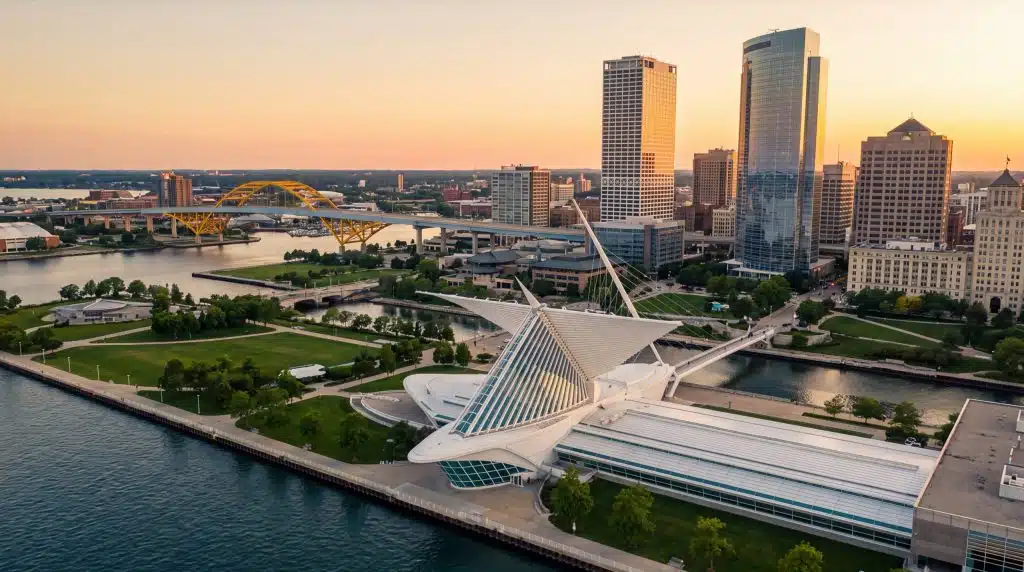
40,368+ local distributors across all 50 states — thousands of cities, same week, single contract.
Draw any neighborhood on the map and instantly see how many households are inside, plus a price estimate. No quote required. No email gate.
Map Your Area & Count the Households →
Opens the DTD Campaign Planner in a new tab.
Loading the live distributor network map. If it doesn’t appear shortly, you can open the full Campaign Planner for the same coverage data.
Each metro below has its own dedicated door hanger distribution page. For any other ZIP in the U.S., use the Campaign Planner above.


















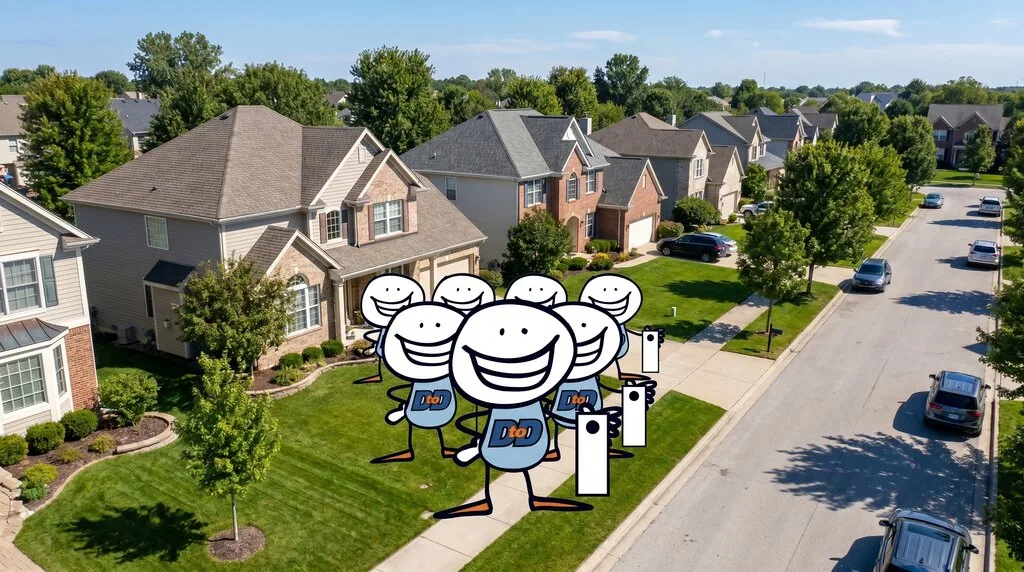
Distributors live in neighborhoods like this one across all 50 states — 99% of U.S. cities have an active DTD network.
DTD’s national model means door hanger campaigns running in thousands of cities simultaneously, under a single contract, with one Proof of Delivery standard.
Direct to Door Marketing (DTD) operates door hanger distribution campaigns at every scale — from 1,000-piece neighborhood drops to 50,000,000+ piece nationwide rollouts for Fortune 500 brands. What makes DTD different from every other door hanger distribution service isn’t just the range. It’s that we can run campaigns in thousands of cities simultaneously — same week, same brand, same Proof of Delivery standard — because we have 40,368+ local distributors living in almost every city and town across all 50 states.
When a national franchise needs to support 200 grand openings across 47 markets within a single month, no regional door hanger distributor can help. Coordinating dozens of separate vendors with separate quotes, pricing, and verification standards isn’t a marketing program — it’s a logistics nightmare. DTD operates as a single national network that handles the entire footprint under one contract, one campaign coordinator, and one delivery standard.
This is the structural advantage that compounds: more distributors in more places means more campaigns can run at the same time, which means better unit economics at scale, which means lower per-piece pricing for nationwide campaigns. Other companies can do single markets well — DTD can do every market well, simultaneously. That’s why brands from local roofers to Fortune 500 franchises choose DTD.
Side-by-side against the other national door hanger distribution services that appear in Google’s top 10 for this category. Numbers and policies are pulled from each competitor’s public marketing pages as of May 2026.
| Capability | DTD | PowerDirect | RunAmplify | MarketAnywhere | DoorHangers.com |
|---|---|---|---|---|---|
| Years in business | 30+ (since 1995) | Not disclosed | Not disclosed | 9 years | Not disclosed |
| Local distributors | 40,368+ | Not disclosed | Not disclosed | Not disclosed | Not disclosed |
| US market coverage | 99% of cities, all 50 states | ~90% of US markets | “Largest metros” | Stated 50-state | USPS EDDM only |
| Simultaneous multi-city campaigns | Yes — thousands of cities, single contract | Single-team-based | Single-team-based | Single-team-based | USPS routes only |
| Delivery verification method | AI Management Platform + Proof of Delivery photos + supervisor QC | Location-tracking device + audit | Location-tracking device + photos | Location-tracking dashboard | USPS scan only |
| Per-piece photo of placement | Yes — on every Proof of Delivery | Not standard | Yes | Implied (app) | No |
| On-the-ground supervisor model | Yes — full-day QC presence in the distribution area | Teams of 6 (in pairs) | Not specified | Brand ambassadors | None (USPS) |
| True door-to-door (not USPS) | Yes | Yes | Yes | Yes | No (USPS EDDM) |
| Minimum order size | 1,000 pieces | 10,000 pieces | 2,500 pieces | Not disclosed | 200 (EDDM route) |
| Maximum proven scale | 50,000,000+ pieces | Not disclosed | Not disclosed | Not disclosed | USPS-limited |
| National coverage map | Yes — interactive Campaign Planner | No | No | No | USPS lookup |
One honest note about the comparison: several competitors publish specific response-rate or ROI percentages. DTD deliberately does not. Response rates depend on your offer, design, list quality, and follow-up cadence — not on the distribution service. A door hanger distribution service that promises you a specific response rate is making a promise it cannot keep. What we promise is what we control: every door hanger reaches a real front door, and you get a photo to prove it.
A newer class of app-based platforms sells distribution as a self-serve product: create an account, upload a campaign, and the platform assigns gig workers. The model differs from DTD’s managed national network in three ways.
| What matters | DTD | Self-serve app platforms |
|---|---|---|
| Delivery verification | Proof of Delivery photos included as the standard on every campaign, analyzed by the AI Management Platform | Location tracking is the default; photo verification is typically an upgrade, an add-on, or not part of the standard product |
| Campaign guidance | Expert campaign advisors — no sales reps, nobody earns commission, recommendations built on 30 years of campaign data | Self-serve dashboard — you plan, target, and troubleshoot your own campaign |
| Nationwide simultaneous capacity | Thousands of cities in the same week under a single contract | Limited to published metro lists; multi-market rollouts run as separate campaigns |
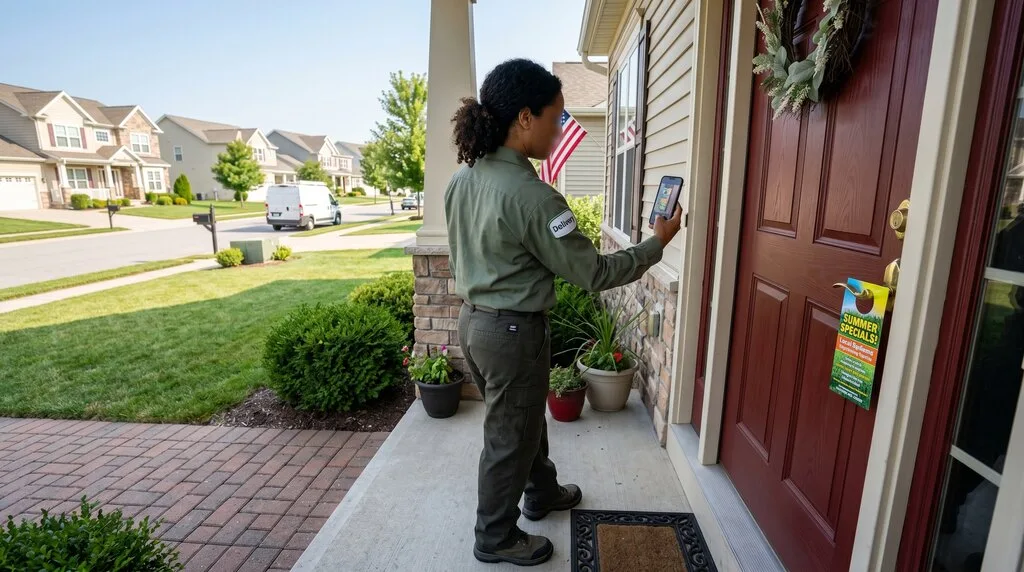
A DTD distributor capturing a Proof of Delivery photo.
DTD’s verification model has three layers, and each one does work the others can’t. A field supervisor is on the ground in the distribution area for the full day — an actual person verifying pieces are going to the right neighborhoods, auditing placement quality at the door, and coordinating the distributor team throughout the day. A Proof of Delivery photo is captured for the campaign. And the DTD AI Management Platform analyzes every Proof of Delivery photo for placement correctness, surfacing anomalies for human review before the final report goes to the client.
Each layer answers a different question: the supervisor answers whether the work is being done correctly while it happens, the photo answers whether the door hanger actually reached the door, and the AI analysis answers whether any patterns across thousands of pieces need attention. That is what DTD means by Proof of Delivery — evidence at the door, watched over by a person, validated by AI. It is the reason national franchises and Fortune 500 brands trust DTD with multi-million-piece nationwide campaigns.
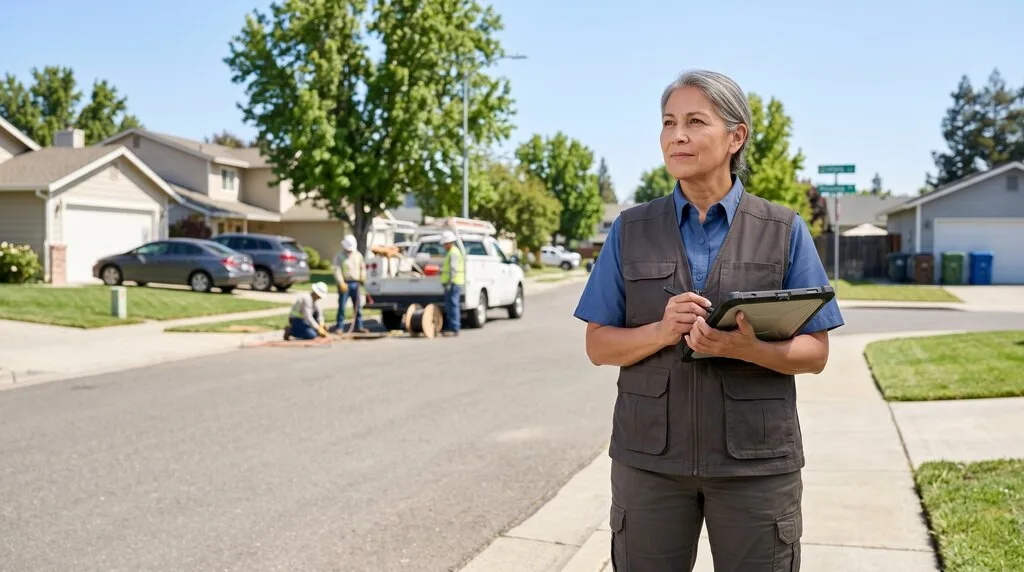
A DTD field supervisor on the ground during a distribution day.
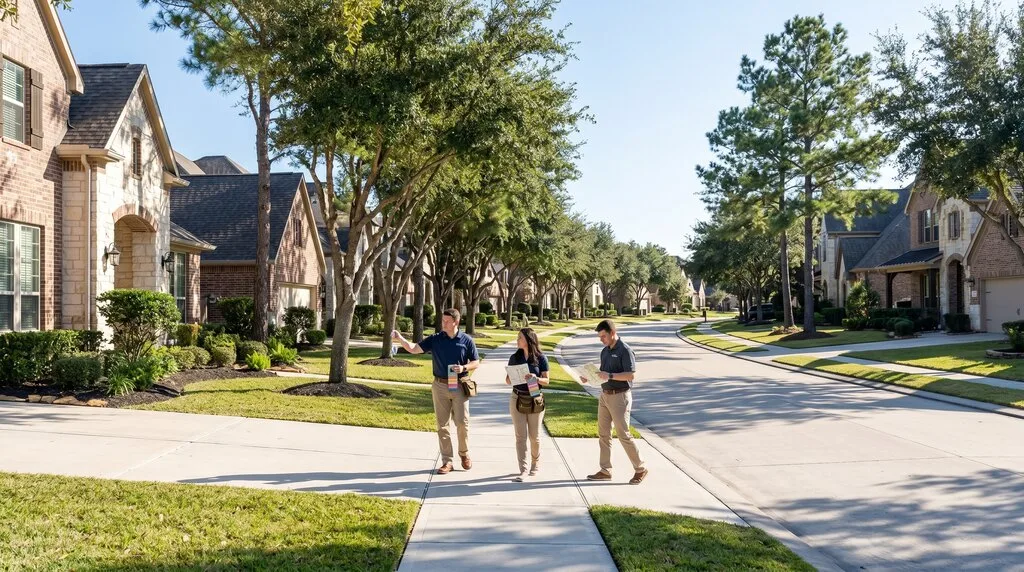
DTD distribution crews live in the neighborhoods they serve — local network coverage in 99% of U.S. cities.
Every DTD campaign follows the same six-step workflow, whether you’re distributing 1,000 door hangers or 5,000,000 across 200 cities.
Use the DTD Campaign Planner to draw any service polygon on a real map. The tool returns an instant household count and price estimate. No quote form required.
Send us your artwork and we print it on premium cover stock. Printing is part of the package, not a separate purchase — we print what we deliver.
From the 40,368+-distributor network, we assign the local team that lives in your target neighborhoods.
A DTD supervisor is on the ground in the distribution area for the full day, verifying pieces are going to the right neighborhoods, auditing placement quality, and capturing Proof of Delivery photos as one part of that QC work.
Every Proof of Delivery photo is analyzed by DTD’s AI Management Platform for placement correctness. Anomalies are surfaced for human review. The client receives a verified report with the coverage map and sample Proof of Delivery photos — keeping you informed every step of the way.
Final report includes the coverage map, distributor team, total pieces delivered, sample Proof of Delivery photos, any flagged anomalies, and the supervisor’s QC summary. For multi-campaign clients, this becomes a per-market dashboard.

The end product of every DTD door hanger campaign.
Door hanger distribution works wherever the buyer makes the decision at home. DTD’s largest client verticals:
HVAC and plumbing decisions are made at home, often as emergencies. A door hanger placed on a Tuesday becomes the saved number on Saturday morning when the AC breaks.
Door hangers remain a top “after-service” marketing tactic in pest control — “We just treated your neighbor at 123 Maple Drive.” Industry-leading trade press PCT Magazine confirms this remains current best practice, not legacy.
Seasonal-spike businesses live and die by neighborhood density. Door hangers let lawn care companies route the next morning’s crews directly off this week’s leads.
The National Association of REALTORS identifies “geographic farming” — consistent door-to-door, door hanger, and direct-mail presence in a defined neighborhood — as a core listing-generation practice. DTD runs farming campaigns for top-producing agents in dozens of markets.
Post-storm roofing campaigns are time-sensitive and route-density-sensitive. DTD’s nationwide network can mobilize within days of a major storm event.
A door hanger with a “first visit” offer in the homes within a 1.5-mile radius of a new restaurant opening is one of the most consistent local-marketing tactics in the industry. Multi-unit franchises coordinate grand openings across dozens of markets at once.
Campaigns use door hangers for precinct-level saturation — literature placed at the door in the closing weeks, timed around early voting and election day. DTD runs door hanger campaigns for candidates and ballot measures across the country.
Cleaning services, painting, garage doors, solar, security systems — any business where the buyer is the homeowner and the decision happens at the home.
Moving and relocation companies advertise where their crews already work — dense residential streets inside the metro they serve. A door hanger puts the estimate number at the address, on the door, in the week the customer is shopping.
Newly built subdivisions are ordinary routes for a local distributor — the streets are finished, the homes are occupied, and every address is walkable. Tell us which neighborhoods and we quote the drop like any other job.
Storefronts live on the trade area around them. Grand openings, seasonal promotions, and new-product announcements reach the households closest to the door, which is where repeat local business actually comes from.
New practices, relocations, and providers taking new patients rely on neighborhood awareness. A door hanger reaches the household directly, in the catchment area a patient will actually travel from.
The closest adjacent service to door hanger distribution is USPS Every Door Direct Mail. Both put a physical piece into a household. EDDM goes into the mailbox; door hangers go onto the door handle. EDDM is delivered by a postal carrier with no proof of which specific homes were reached; door hanger distribution is delivered by a trained distributor with a Proof of Delivery photo for each campaign. EDDM has minimum saturation requirements per route; door hanger campaigns can target a single street. EDDM cost is rate-card driven; door hanger cost is volume-driven.
Most marketers don’t choose between them — tight-targeted neighborhood pushes go to door hangers, large-area saturation goes to EDDM. We wrote a full comparison covering cost, targeting precision, and proof-of-delivery models below.
Door hanger distribution pricing scales with three factors: the size of the campaign, how concentrated the target neighborhoods are, and the market being covered. Larger campaigns and denser coverage areas price better per household, because routes run tighter and a crew covers more doors per hour.
Pricing depends on neighborhood density, drive-time between routes, and seasonal demand (Spring March-April runs higher). For exact pricing, use the DTD Campaign Planner to get an instant estimate for your specific coverage area, or request a free quote.
DTD’s minimum campaign is 1,000 pieces — but the minimum is not the recommendation. Based on three decades of campaign data across millions of delivered pieces, we recommend 5,000 to 10,000 door hangers for a first campaign. Think of it like a focus group: 1,000 households is too small a sample to tell you anything reliable about your market. Five to ten thousand households gives you a true read while keeping the initial investment manageable.
And because Direct to Door Marketing has no sales representatives and nobody on the team earns commission, that sizing advice is exactly that — advice built on what has worked across 30 years of campaigns in your industry, not a quota. Call (866) 643-4037 and you will talk to a campaign expert, not a salesperson. For a deeper look at what drives per-piece cost, see the door hanger distribution cost guide — and if your campaign calls for flyers instead, DTD runs nationwide flyer distribution on the same network.
The case for door hanger distribution in 2026 is grounded in three decades of direct-marketing research and postal industry data:

The case for door hanger distribution, grounded in three decades of direct-marketing research.
#1
Direct mail delivered the highest house-list return on investment of any paid channel measured in the ANA’s 2023 Response Rate Report — ahead of email, paid social, display, and SMS.
Source: ANA Response Rate Report 2023
1 in 3
Only about one in three viewable digital ads is actually looked at by a human — the rest of the spend buys impressions nobody sees. A door hanger is, by definition, seen by whoever takes it off the door.
17 days
Average time mail stays in households per Royal Mail’s landmark 18-month neuroscience and ethnographic study — “more powerful overall impact on key measures of neuroscience than email or TV.”
82.9M
Owner-occupied U.S. housing units — up 8.4% from 2014-2018 (US Census 2019-2023 ACS). The audience for door-delivered marketing is larger and more stable than it has been in a decade.
Source: US Census Bureau ACS 2019-2023
82%
Of marketers reported increasing direct mail spend in 2024 (up from 58% in 2023). Most also rank it among their strongest-performing channels. The “direct mail is dying” narrative does not survive contact with the budget data.
Source: Lob × Comperemedia 2024 State of Direct Mail Marketing
Representative examples of the door hanger distribution campaigns DTD runs across industries. Results are described qualitatively — DTD does not publish response-rate percentages because results depend on the client’s offer, design, and follow-up, not on the distribution service.
A campaign like this is what DTD’s nationwide network was built for: a franchise system needs to support spring service-call demand across dozens of metro markets in a single 6-week window. DTD coordinates the full footprint from a single contract, with per-market Proof of Delivery reports delivered to each franchisee.
These campaigns are built around the “We just treated your neighbor at [address]” door hanger format that works in pest control because the social-proof and proximity signals are concrete. The model is designed to be repeated on a 60-90 day cycle as new service appointments build the next round of neighborhood social proof.
Storm-response roofing campaigns are time-sensitive and route-density-sensitive. A campaign like this depends on activating the local distributor network within 24-48 hours of a major hail or wind event — before the out-of-state storm-chaser roofers arrive in market.
GOTV door hanger campaigns deliver high-propensity-voter messaging to targeted households in the closing days before an election. DTD’s distributor network is non-partisan — we work with candidates and committees from both parties — and the campaign team uses the Proof of Delivery photos as the canvas verification record.

Built America’s largest door hanger distribution network from the ground up since 1995.
Randy Etheridge founded Direct to Door Marketing in 1995 with one belief: that a real human placing a real piece of marketing on a real door is the single most accountable form of advertising in existence. Three decades later, DTD operates the largest local-distributor network in the United States for door hanger distribution — 40,368+ distributors, millions of pieces delivered, 99% U.S. city coverage.
Randy still personally signs off on the largest national campaigns DTD runs. The mapping software, the AI Proof of Delivery analysis, the supervisor-led QC model — these are the systems he built to keep the company’s accountability standard intact as it scaled from a single Tennessee crew to a 50-state network.
DTD is registered as Door Hangers Work, LLC (Wyoming), operating as Direct to Door Marketing. Headquartered at 2118 Wilshire Blvd #232, Santa Monica, CA 90403.
Talk directly with Randy about a campaign: (866) 643-4037 · Connect on LinkedIn
National brands and franchise systems that have used DTD for door hanger campaigns (partial list).
★★★★★
“We’ve been running DTD door hanger campaigns for six years across multiple markets. The Proof of Delivery photos are the difference. The photos tell me the work was actually done, campaign after campaign. No other distribution service we tried gave us that level of accountability.”
— Marketing Director, National HVAC Franchise
★★★★★
“We needed door hangers distributed in 12 cities the same week for a product launch. Every other vendor I called said it wasn’t possible. DTD said yes, gave us one quote, and delivered. Per-market reports were back within 48 hours.”
— VP of Field Marketing, Consumer Brand
★★★★★
“DTD has been our door hanger distribution service for our regional pest control company for four years. The ‘We treated your neighbor’ format has become a core part of our marketing playbook. Their team treats my campaigns like their own.”
— Owner, Southeast Regional Pest Control

Get an instant coverage map and price estimate, or talk to a DTD campaign coordinator directly.
Last Updated: July 8, 2026. DTD updates this pillar page quarterly with current distributor counts, citation data, and industry research.