
Flyer distribution makes it easy for businesses in Los Angeles to reach new customers. Handing out flyers helps companies promote their services and connect with more people in busy neighborhoods and event areas.
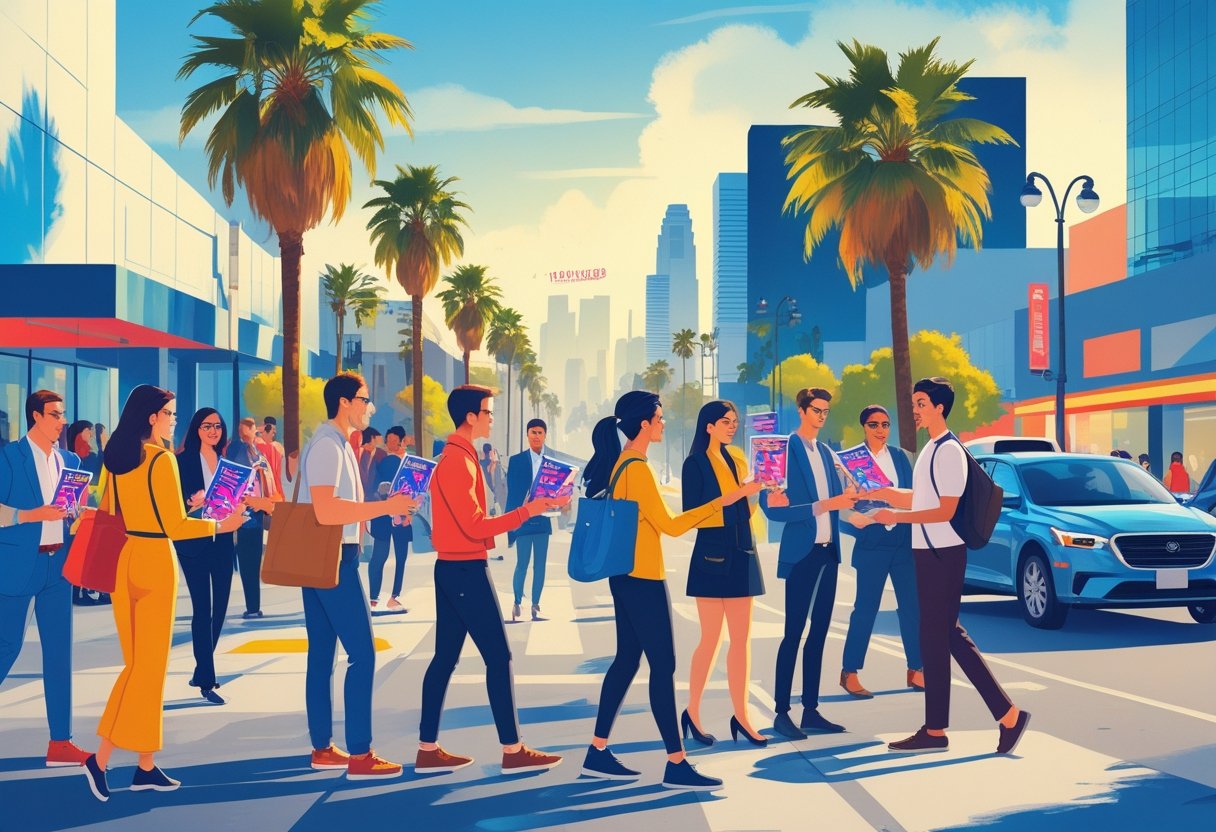
Lots of companies in Los Angeles use flyer distribution because it lets them share information directly with people. You can hand flyers out, leave them on doorsteps, or put them on car windshields.
The best method depends on your area, your target audience, and what you want to achieve.
Key Takeaways
- Flyer distribution connects businesses in Los Angeles with new customers.
- Choosing the best method increases campaign success.
- Planning and measuring are important for effective results.
What Is Flyer Distribution?
Flyer distribution is a popular marketing method for businesses in Los Angeles. It means handing out or delivering printed materials like flyers and brochures to specific areas or people.
Definition and Key Concepts
Flyer distribution is when you give printed ads to people in public or deliver them to homes and businesses. The main goal is to share info about products, services, events, or special deals.
This process includes planning where, when, and how you’ll hand out flyers. Distribution can happen on streets, at events, in shopping centers, or by going door-to-door.
Some companies use their own teams, while others hire services that specialize in this kind of work. Targeting the right locations and audience makes flyer distribution more effective.
Careful planning boosts your chances of reaching people who’ll actually care about your business.
Benefits for Businesses
Flyer distribution gives Los Angeles businesses a direct way to advertise to potential customers. Flyers can quickly spread the word about sales, grand openings, or special events.
This type of promotion is especially handy for small businesses looking for more local attention.
Benefits of flyer distribution:
| Benefit | Details |
|---|---|
| Local Reach | Targets customers in specific neighborhoods or areas. |
| Cost-Effective | Usually cheaper than radio, online, or TV ads. |
| Direct Communication | Hands information directly to potential customers. |
| Fast Results | Can increase foot traffic and sales quickly. |
Flyers can also help you track promotions. For example, you might add a coupon code to see how many people respond. That way, you’ll know if your campaign is working.
Types of Promotional Materials
Businesses in Los Angeles use different kinds of promotional materials. Flyers are single sheets, usually printed with bold text and clear messages. They’re best for short-term offers and quick announcements.
Brochures are folded pamphlets with more info about a business, its products, or services. There’s more space for images, details, and contact info.
Common types of promotional materials:
- Flyers (one-sided or double-sided)
- Brochures (bi-fold, tri-fold)
- Leaflets
- Catalogs or mini booklets
Your choice depends on the message and the audience. Simple flyers work for quick promotions. More detailed brochures are better if you want to give out extra info or come across as professional.
Why Choose Flyer Distribution in Los Angeles?
Flyer distribution in Los Angeles helps businesses reach a huge, diverse population. Knowing the market, local habits, and audience segments is key for a good marketing plan here.
Unique Market Dynamics
Los Angeles isn’t just one city—it’s a patchwork of neighborhoods, each with its own style. Downtown is busy with retail, Hollywood is creative, and the San Fernando Valley is full of families.
Each area draws its own crowd. Businesses can target their flyers by picking the right neighborhoods.
Some parts of LA have packed shopping zones, so handing out flyers there gets you seen. High foot traffic in places like Santa Monica and Venice Beach means more eyes on your message.
LA also hosts tons of events, from outdoor fairs to food festivals. Flyers at these events reach both locals and visitors.
Direct marketing like flyers still has a place in LA. Many companies use them to make a personal impression in a city that’s always changing.
Local Consumer Behavior
People in LA are always looking for new products, food spots, and things to do. Handing out flyers in the right places can grab attention fast.
Shoppers and event-goers often jump at special deals or coupons they find on flyers. Recent surveys show many locals are willing to try a business after getting a flyer.
If you time it right—like weekends or community events—your flyer stands out. LA’s cultural diversity is strong, so flyers in English, Spanish, or other languages reach more people.
Businesses that think about local languages and interests connect better with their audience, especially when they’re promoting neighborhood-specific services.
Ideal Target Audience Segments
The target audience for flyer distribution in LA isn’t one-size-fits-all. Common groups include students on college campuses, tourists in Hollywood, and families in suburban areas like Glendale.
Here’s a quick look at possible audience groups:
| Segment | Best Locations |
|---|---|
| Students | Near colleges, bus stops |
| Tourists | Museums, landmarks |
| Families | Parks, shopping centers |
Small businesses, event organizers, and new brands often use flyers to reach these groups. Choosing where and when to hand out flyers matters a lot.
If you tailor your flyers—design, offers, language—to each group, your campaign stands out and reaches more people.
Types of Flyer Distribution Services
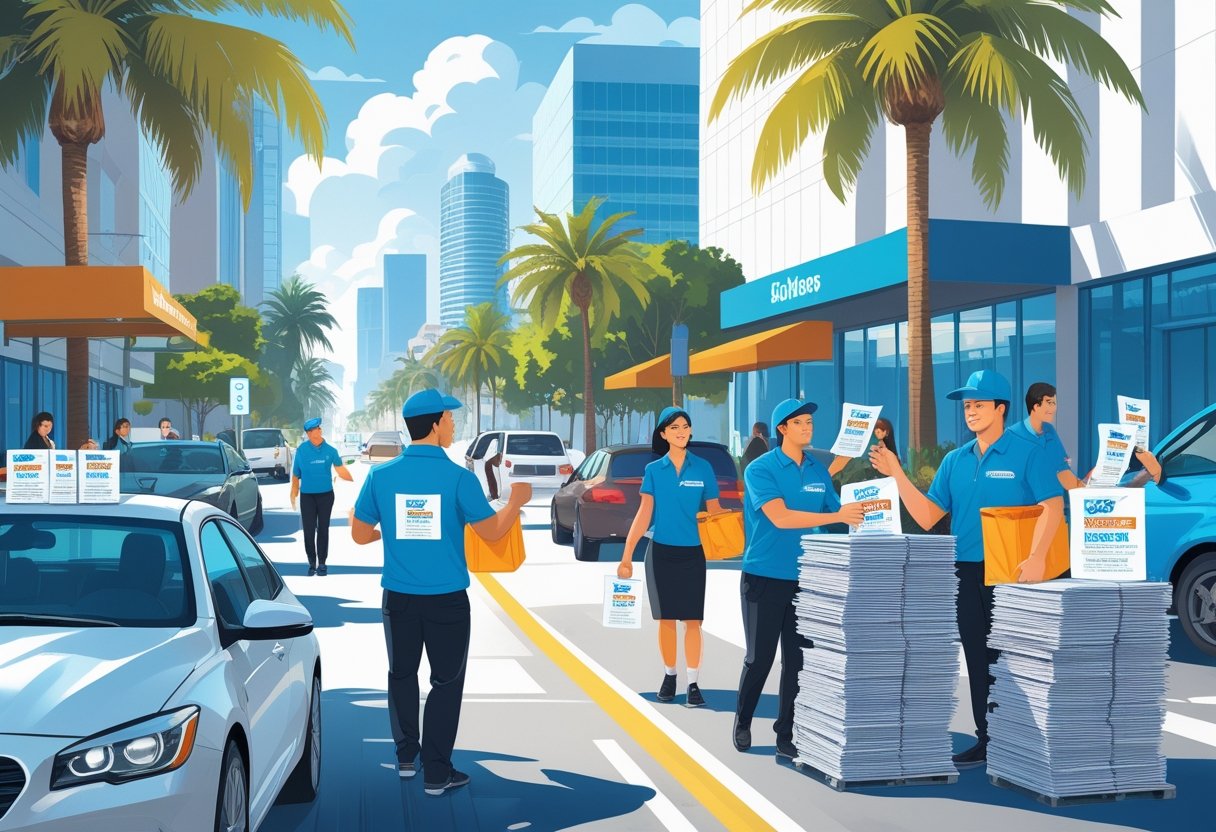
Flyer distribution services use targeted methods to reach people in specific neighborhoods. Flyer and door hanger marketing and door hanger distribution are both popular for their direct approach and ability to connect with people at home.
Door-to-Door Distribution
Door-to-door distribution is one of the most common flyer services in Los Angeles. In this method, trained staff walk through neighborhoods and leave flyers at each home.
This approach works well for local businesses because you can target certain zip codes or census tracts. It’s a way to deliver marketing materials without relying on digital channels.
Businesses use this to send out promotions, coupons, menus, or event details right to the people they want to reach. Teams often coordinate with local events or seasons to boost impact.
Some teams even report back with maps, photos, or delivery confirmation so businesses know where their flyers went. Door-to-door marketing is great for raising awareness about grand openings, special sales, and local services.
Door Hanger Campaigns
Door hanger campaigns are another effective way to get noticed. Here, the flyer is designed as a hanger and placed right on the front doorknob or handle.
Residents see the message as soon as they come or go. Door hanger distribution stands out because the material doesn’t get mixed up with junk mail or lost among other ads.
It’s less likely to blow away or get missed. Many businesses use door hanger campaigns for important messages, like service updates, new offers, or appointment reminders.
With a visible and unique format, door hanger campaigns boost the chances that people will read and remember your ad.
| Feature | Door-to-Door Distribution | Door Hanger Campaigns |
|---|---|---|
| Delivery Location | Front door/mailbox | Doorknob/handle |
| Risk of Misplacement | Sometimes mixed with other mail | Unlikely—hangs on door |
| Visibility | Moderate | High |
| Typical Uses | Menus, ads, coupons | Reminders, offers, events |
Planning Your Distribution Campaign
If you want a successful flyer distribution campaign in Los Angeles, you need to plan carefully. Having and setting clear goals, knowing your audience, and managing costs will help your campaign hit the mark.
Setting Goals and Objectives
Setting specific goals guides every step of your distribution campaign. Campaigns work best when you have a clear purpose—like raising brand awareness, promoting an event, or boosting sales.
Goals should be measurable and based on what you hope to achieve. For example, maybe a restaurant wants 200 new customers in a month.
You can track responses with unique discount codes or QR codes on your flyers. That way, you’ll know if your campaign is working.
Defining objectives also helps you decide where and when to distribute. If you want to reach working adults or families, that’ll affect your location and timing.
The more detailed your goal, the easier it is to track results and make changes if you need to.
Identifying the Target Audience
Knowing your target audience is key. The best campaigns match flyer messages and images to the people most likely to respond.
In Los Angeles, your audience might be local residents, tourists, business owners, or students.
Ways to identify the target audience:
- Check your customer data.
- Analyze sales or website traffic trends.
- Look at neighborhoods where people fit your ideal profile, like young professionals or families.
- Think about language and culture. For example, a flyer in Spanish might work better in some areas of the city.
If you understand your audience, you can pick the right flyer content, distribution areas, and the best times to hand out or deliver materials.
Budgeting and Printing Costs
Planning a budget makes a marketing campaign run smoother. Printing costs eat up a big chunk of spending and shift depending on flyer size, paper, and how many you order.
Here’s a basic breakdown:
| Item | Approximate Cost (per 1,000) |
|---|---|
| Standard flyers | $50 – $150 |
| Glossy/color flyers | $100 – $250 |
| Design services | $50 – $200 |
Factor in the cost of staff for distribution or a delivery service. Permits might be necessary in some public spots, so set aside a little extra for that.
Listing expenses and getting quotes early helps you dodge overspending and stick to your plan.
Effective Marketing Strategies for Flyers
A smart flyer campaign depends on both design and how you get flyers into people’s hands. In Los Angeles, the best results usually come from sweat-the-details planning and sticking to tried-and-true direct marketing basics.
Design Considerations
Keep flyer design clean, easy to scan, and visually interesting. Bold headlines and plain language grab attention. Eye-catching colors and clear images help your message pop.
Only include what matters—call to action, contact info, maybe a deal. Too much info just turns people off.
Key flyer design points:
- Use large fonts for quick reading
- Bullet points make info digestible
- Consistent branding—logos, colors—builds trust
High-quality paper and sharp graphics give flyers a polished look. Double-sided printing fits more info without cramming. Toss in a simple map or QR code so people can act fast.
Distribution Methods
The way you distribute flyers changes how many folks actually see and respond. In LA, common options are door-to-door delivery, handing flyers out in busy areas, or dropping them at stores with lots of foot traffic.
Events like street fairs or concerts are great for reaching a crowd quickly. Targeting certain neighborhoods or groups boosts your chances.
Local shops and community centers can help business flyers build trust. Timing matters too—mornings and weekends usually work best for handouts.
Track results with promo codes or special phone numbers on your flyers. That way, you’ll know what’s actually working and what needs tweaking.
B2B and Specialized Flyer Distribution
Flyer distribution in Los Angeles isn’t just for general audiences. Companies and organizations use specific strategies to reach businesses, voters, or event crowds with a sharp message.
Business to Business Flyers Distribution
Business to business flyer distribution targets other companies. Distributors hand out flyers at business parks, office buildings, and industrial zones.
Sometimes, they deliver right to decision-makers—store managers or office staff. The big plus? You reach buyers who can place big orders or start partnerships.
These flyers usually promote wholesale deals, supplier services, or new openings. Some services offer tracking or proof of delivery, like logs or photos.
Workplaces often have their own rules, so you might need permission or scheduled visits. A good provider knows how to handle these details and plan efficient routes.
Political Campaign Distribution
Political campaigns in LA use flyer distribution to reach voters. They focus on neighborhoods, apartments, and local businesses in certain districts.
Timing is everything, especially near elections. Campaign teams hand out flyers or leave them on doors, sharing voting dates, polling places, and candidate positions.
Clear info helps people decide. Campaigns sometimes use volunteers, but pros make sure flyers get delivered on time and to the right spots.
Distribution companies stick to legal guidelines and avoid restricted zones.
Conventions and Events
Flyers are everywhere at LA conventions and big events. Large venues let brands connect face-to-face with attendees.
Staff hand out flyers at entrances, booths, or registration desks. Event flyers usually spotlight schedules, products, or deals.
Targeted handouts can boost booth visits or ticket sales. Distributors sometimes wear branded shirts for extra visibility.
Event organizers often want proof of permission before you hand anything out. Reliable companies work with event staff and follow venue rules. Timely, organized delivery keeps things from getting messy.
Measuring Flyer Distribution Success
When businesses hand out flyers in Los Angeles, they want results. Measuring what happens next helps you figure out if the campaign worked—or if it flopped.
Tracking Response Rates
Tracking response rates shows how many people actually act after getting a flyer. Companies add QR codes, unique promo codes, or special landing pages to make tracking simple.
These tools help marketers count visits, scans, and redemptions.
For example, you can check how many promo codes got used before and after your campaign. If the number jumps, you know the flyers did something.
A quick survey like “How did you hear about us?” can also help.
Here’s a sample response table:
| Method | Responses Tracked |
|---|---|
| QR Codes | 85 |
| Promo Codes | 60 |
| Landing Pages | 110 |
Good records let you see which flyers or designs actually grab attention.
Analyzing Sales Impact
Flyer distribution should lead to more sales. After you hand out flyers, check if your sales numbers go up.
Compare sales during the flyer campaign to previous weeks. Sometimes you’ll spot more customers or a bump in revenue.
Say a restaurant gets 15% more orders during the campaign—that’s probably thanks to the flyers. Keep sales data simple. List products or services featured in the flyer, then track if their sales rise.
Graphs can help you spot trends, if you’re into that.
Optimizing Future Campaigns
Every campaign is a learning opportunity. Look at which flyer designs, spots, and times got the best results.
If one neighborhood responded more, focus there next time. Adjust flyer designs to highlight popular offers or clearer contact info.
Try changing the day or time for handouts to reach new crowds. After each campaign, use a checklist:
- Which designs got most responses?
- Where did most sales come from?
- Did certain locations have low results?
Better tracking and review make future campaigns sharper and more focused.
Getting Started with Flyer Distribution in Los Angeles
Flyer distribution in LA means picking the right partner, knowing how to connect, and using new tools to manage your campaign. Local companies try to keep things straightforward and effective.
Choosing a Distribution Partner
Picking a flyer distribution service really matters. Your marketing depends on it.
Find partners who know LA neighborhoods well—local knowledge means better targeting. Check reviews and ask for references from similar clients.
Reliable services show you clear maps and proof of delivery. It helps if they can share flyer samples and detailed plans before you start.
Some offer door-to-door, hand-to-hand, or store placements. A good partner explains their process, answers your questions, and offers flexible options.
Make sure you know all costs and timelines up front. Surprises aren’t fun.
How to Contact Us
To use flyer distribution services in LA, reach out by phone, email, or an online form. Most companies have a “Contact Us” page with all the details.
For quick answers, call during business hours. Email works after hours or if you want to send attachments.
Some offer live chat or forms where you can describe your needs. Be ready with your target areas, flyer quantity, and preferred dates.
Contact Checklist:
- Name and company
- Phone and email
- Type of flyers
- Target neighborhoods
- Preferred timeline
Our State-of-the-Art AI Management Platform
Some flyer distribution companies in LA use advanced AI management platforms. These tools help plan, monitor, and report campaigns in real time.
AI maps out the best streets or neighborhoods using data. This avoids overlap and widens your reach.
The platform can track deliveries and provide proof with photos or digital logs. Clients log in to see reports and check progress—no waiting around for updates.
This transparency keeps things on track and brings peace of mind. The AI system collects feedback so everyone can improve future campaigns.
Frequently Asked Questions
Flyer distribution in LA involves lots of moving parts—from picking locations to knowing the laws. Costs, audiences, and methods all shift, so there’s no single best way.
What are the best methods for flyer distribution in metropolitan areas?
Handing out flyers in busy spots works well. Street corners, big events, shopping centers, and transit hubs get lots of eyes.
Some businesses go door-to-door or leave flyers on parked cars, but always check if that’s okay in your city.
How do I measure the effectiveness of my flyer distribution campaign?
Count the number of calls, emails, or website hits after you distribute. Using unique codes or special phone numbers on flyers shows which locations get the best response.
What are the legal considerations for distributing flyers in urban areas?
LA and other cities have rules about where you can hand out or post flyers. Some spots need permission, and putting flyers on cars without approval can mean fines. Always check local laws first.
How can I target specific demographics with flyer distribution?
Pick locations where your audience hangs out—college campuses for students, gyms for fitness fans. Make sure the flyer’s design and message fit the group you want to reach.
What is the typical cost range for professional flyer distribution services?
Professional flyer distribution in LA usually runs $150 to $400 per 1,000 flyers, depending on method and area. Busier spots or targeted deliveries can cost more.
What are the key differences between door-to-door and public space flyer distribution?
Door-to-door distribution sends flyers straight to people’s homes or apartments. You can really zero in on certain neighborhoods this way.
Public space distribution, on the other hand, reaches all sorts of folks in places like parks or sidewalks. It’s a lot less targeted, though.
Some spots might have tighter rules for handing out flyers in public, so that’s something to watch out for.